
What Academic Integrity Means Now
The old definition has quietly broken. The new one is stronger, and it is the only version worth defending.

Somewhere in the past few years, academic integrity quietly stopped meaning what it used to. In a lot of universities it has come to mean, in practice, one thing: did the student use a forbidden tool, and can we catch them if they did. Integrity became a compliance problem, and compliance became a detection problem, and the detection does not work. So the concept that is supposed to underpin the entire value of a degree is now resting on a broken tool and a game of cat and mouse. That is worth fixing, and fixing it starts with remembering what the word was always for.
What academic integrity actually is
Academic integrity is the principle that academic work is honest: that what a student presents as their own understanding genuinely is their own, that sources are acknowledged, and that a qualification therefore means what it claims to mean. The familiar list of offences, plagiarism, fabrication, contract cheating, sits underneath that principle. They are all versions of the same lie: presenting as your own learning something that is not.
But notice what the principle is really protecting. It is not protecting the rules for their own sake. It is protecting a single promise: that the credential reflects real understanding in the person who holds it.
Integrity is the guarantee that the learning is real.
Everything else, the citations, the originality checks, the honour codes, is machinery built to keep that guarantee true. When we forget that, and treat the machinery as the point, we end up defending the rules while losing the thing the rules were for.
Why the old enforcement model broke
The old model located integrity in the artefact. The essay was the unit of trust. If the essay was original, integrity was intact; if it was copied, integrity was breached. That worked while producing an original-looking essay required actually doing the work. It does not work any more, for two reasons that are now beyond dispute.
First, the artefact is free. A fluent, well-referenced, original-looking essay can be produced in seconds, with no understanding behind it at all. The document no longer carries the evidence it used to carry, because the link between the artefact and the thinking has been cut.
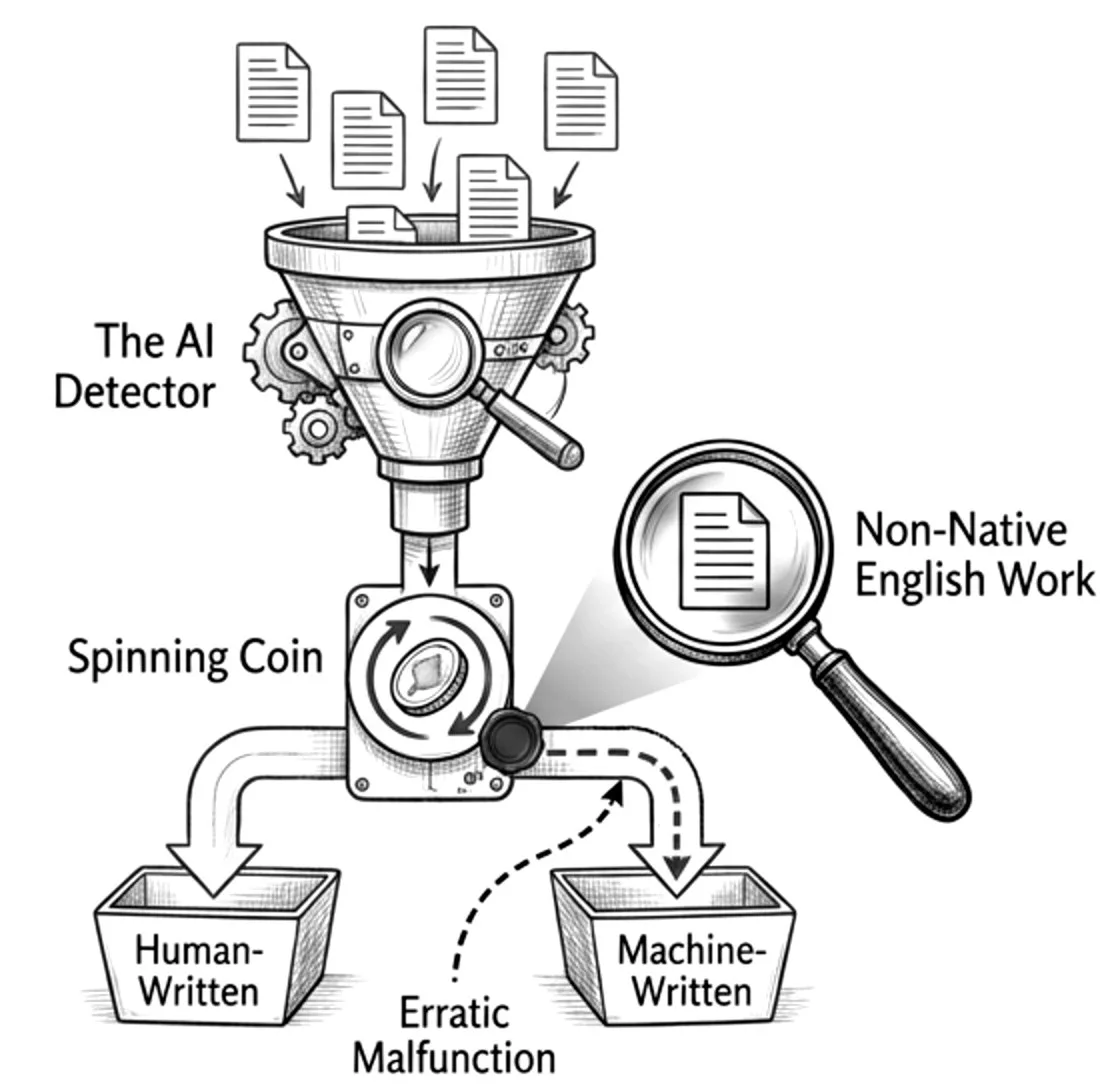
Second, the tool we reached for to repair that link does not function. Independent testing found AI detectors neither accurate nor reliable, and they wrongly flag a large share of essays by non-native English speakers as machine-written. Serious institutions, Vanderbilt among them, have switched their detectors off rather than make integrity decisions on top of a coin toss. So the enforcement model now fails twice over: the artefact no longer proves understanding, and the detector cannot tell you who did the thinking. An integrity regime built on policing the document is defending an empty position.
It is also quietly corrosive. When integrity becomes a hunt for forbidden tools, it teaches students that the goal is not to learn but to avoid getting caught, which is the precise opposite of what integrity is meant to instil.
The reframe: integrity is evidence that learning happened
Here is the shift, and it is smaller than it sounds. Stop asking whether a student used a particular tool. Start asking whether the work reflects their own understanding. Integrity moves from a property of the document to a property of the person: did the learning actually happen, and can it be shown.
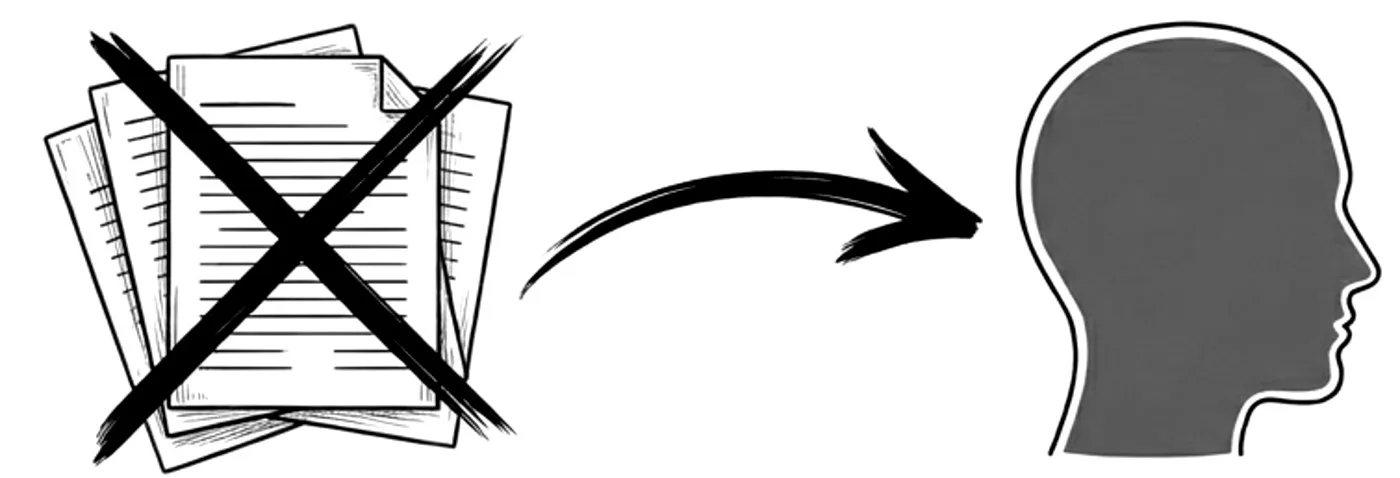
This is not a soft redefinition to dodge a hard problem. It is where the sector's own assessment scholars and bodies have been heading. The argument that integrity is protected by good assessment design rather than by surveillance is well made (Dawson, 2021), and the guidance bodies now say much the same: adapt assessment, build students' ability to use AI well, and protect academic rigour by design (QAA, 2024; Russell Group, 2023). The common thread is a move away from catching misuse and towards evidencing learning.
Once you make that move, AI stops being the enemy of integrity and becomes irrelevant to the question. A student who can explain their argument, defend their evidence, and answer the hardest objection to their case has demonstrated real understanding, and they have integrity, whether or not a machine helped them produce the document. A student who cannot do any of that has not, regardless of what any detector reports. The tool was never the variable that mattered. The understanding is.
What it looks like in practice
Protecting integrity this way means protecting it by design and by dialogue, not by detection. You build assessment so that genuine understanding is what gets tested and shown: a conversation about the work, a defence of the reasoning, a task where the thinking is visible rather than only the output. The detail of how to do that is the cornerstone of this whole argument, and it lives on the main essay. The point here is narrower: the integrity question and the assessment question are the same question. You cannot protect integrity with a policy and a detector while leaving the assessment unchanged. Integrity is restored at the moment you start evidencing learning directly.
It also reframes what we ask of students using AI. The honest use of AI is not a loophole to be policed; it is a discipline to be taught. Used to skip the thinking, AI breaches integrity in the deepest sense, not because a rule was broken, but because the learning the credential certifies did not occur. Used to sharpen the thinking, with the machine questioning the student before it produces anything, it does the opposite: it makes the understanding more real, not less. That is the method worth teaching, and it is an integrity practice, not a threat to one.
Why this matters
Academic integrity matters because it is the load-bearing promise of the entire system. A degree is, in the end, a claim: this person understands this field to this standard. Employers, patients, clients, and the public rely on that claim without being able to verify it themselves. Integrity is what makes the claim trustworthy. If integrity collapses into a broken detector and a culture of getting away with it, the claim becomes noise, and everything built on it weakens with it.
Which is exactly why the reframe is not a retreat. Defending integrity by policing the artefact is defending a position that has already fallen. Defending it by evidencing learning is defending the thing that was always worth protecting, and it is a position that holds.
Academic integrity was never really about the tool a student used. It was always about whether the mind behind the work did the work.
That is the version we can still guarantee, and it is the only one worth the name.
Frequently asked questions
What is academic integrity?
Academic integrity is the principle that academic work is honest: that what a student presents as their own understanding genuinely is their own, that sources are acknowledged, and that a qualification therefore means what it claims to mean. Underneath the familiar rules against plagiarism, fabrication and contract cheating sits a single promise it exists to protect: that the credential reflects real understanding in the person who holds it. Integrity is the guarantee that the learning is real.
Why is academic integrity important?
Because it is the load-bearing promise of the whole system. A degree is a claim that a person understands a field to a certain standard, and employers, clients, patients and the public rely on that claim without being able to verify it themselves. Integrity is what makes the claim trustworthy. If it collapses into a broken detector and a culture of getting away with it, the credential becomes noise and everything built on it weakens.
Has AI broken academic integrity?
It has broken the old way of enforcing it, not the principle. Producing an original-looking essay no longer requires understanding, so the document no longer proves learning, and AI detectors are unreliable and biased, so they cannot tell you who did the thinking. Policing the artefact is now defending an empty position. The principle is intact; it just has to be protected by evidencing learning rather than by surveillance.
How do you protect academic integrity when students use AI?
By design and by dialogue, not by detection. Build assessment so that genuine understanding is what gets shown: a conversation about the work, a defence of the reasoning, a task where the thinking is visible. Ask whether the work reflects the student's own understanding, not whether a particular tool was used. A student who can defend their work has integrity whether or not AI helped; one who cannot has not, whatever a detector says.
- Dawson, P. (2021). Defending Assessment Security in a Digital World. Routledge. routledge.com
- Liang, W., et al. (2023). GPT detectors are biased against non-native English writers. Patterns. cell.com
- QAA (2024). Generative AI: advice and resources. qaa.ac.uk
- Russell Group (2023). Principles on the use of generative AI tools in education. russellgroup.ac.uk
- Vanderbilt University (2023). Why we're disabling Turnitin's AI detector. vanderbilt.edu
- Weber-Wulff, D., et al. (2023). Testing of detection tools for AI-generated text. International Journal for Educational Integrity. springer.com
Integrity and assessment are the same question. How to evidence learning directly is in Havruta and the Academy.